Tiny microbes can help addresses climate change - if we stop killing them
By Carina Merrick | Posted July 26, 2019
courtesy of Wikimedia Commons
Thomas Jefferson’s improved mouldboard plow.
When Europeans arrived in the Americas, they applied their mouldboard plows to the prairies, to soils that were rich, dark and black. That soil was steaming with mineral and organic carbon — with soil life so small it was invisible to the human naked (unmicroscoped) eye and, hence, to our consciousness. So we ripped into them with gusto, mining this flesh of earth.
The settler-farmers killed the microbes by exposing them to sunlight, erosion, heat and dryness, and they planted monocrops – a single crop like wheat. Or corn. Or walnuts.
The soil’s rich, dark color faded. The soil lost its carbon, its water, its oxygen. The rich, natural, complex collaborative ecologies were replaced by chemical fertilizers, pesticides, herbicides — inputs that continue to strip life from the thin surface of the planet.
We killed everything — plants, animals, insects, microbes. Each living thing other than our single crop was viewed as an enemy, a “competitor,” and we went to war with every tool at hand, stripping the soil of its naturally complex soup of collaborative dynamic life.read more
Detained immigrants in Yuba City need human contact, visitation group says
By Carina Merrick | Posted July 3, 2019
photo by Chris Nelson
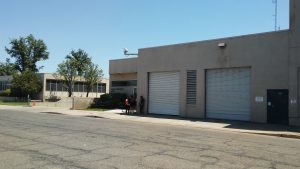
Visitors entrance at the Yuba County Jail
It was serendipity that I visited the man I did at the Yuba County Jail Monday in Marysville.
I got there four minutes too late to see the man I had planned to meet; the second name I had was a man who had been transferred elsewhere and the third candidate wasn’t available for a visit until later in the day. All three of those men had Latino surnames. The man I did get to visit was from Vietnam.
He was a pleasant, middle-aged man with glasses. I could barely hear him through the phone line — another prisoner had to help us get connected because we could not negotiate use of the phone. We were there, facing each other for an hour conversation in one of 13 designated seats in the basement of the Yuba County Jail, looking at each other through dirty glass along with a room full of women and kids — mostly Latinas — there to visit other men.read more
“Together we WASC” has been the tagline coming from the Chico State administration in recent months. It is even featured at the bottom of some emails.
This refers to the accreditation process of the Western Association of Schools and Colleges, a private organization from Oakland, which is given the right to accredit all schools and colleges in the western United States by the U.S. Department of Education. Everything from Stanford University to universities in the South Pacific to secondary schools in Myanmar are reviewed.
Subjects covered range from engineering to theology. The schools are public, private for-profit, and private not-for-profit. All seek WASC’s imprimatur because it awards legitimacy in the eyes of students and donors. And most importantly to universities like Chico State, federal grant makers and federal student loan programs demand WASC accreditation. But very few are denied, or even put on probation.read more
After recent experiences, I’m compelled to present a counter-narrative to those who have spoken out against a “Code Blue” cold-weather shelter (and other sheltering ideas).
At the Feb. 5 Chico City Council meeting, a minority of speakers expressed their reasons for opposing a city-sponsored cold-weather shelter. Their reasons included (paraphrased) “sheltering these people is not Chico’s responsibility, it is the responsibility of Butte County or the non-profits.” Others asserted that because this form of shelter would be open to anyone it would allow for “drug addicts, criminals and sexual predators” (again paraphrased).read more
A writer asks if Camp Fire changed attitudes toward climate change
By Carina Merrick | Posted December 28, 2018
photo by Denise Minor
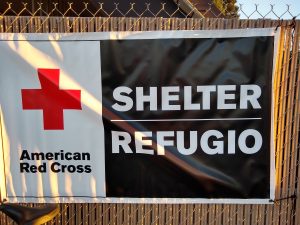
The sky was growing dark by the time I checked in at the Red Cross station on a recent afternoon, in front of the Silver Dollar Fairgrounds in Chico. Two volunteers in red vests greeted me and welcomed me to the shelter for Camp Fire evacuees.
Red Cross Communications Director Stephen Walsh offered to show me around. On that night there were about 700 people staying at the shelter, with some living in their recreational vehicles in the parking lot, some living in a tent city behind the RVs and some living in the three dormitories. All six of the Red Cross shelters that had been opened right after the fire had by then been consolidated to this one.read more
My childhood home is a pool of ashes contained by a cement foundation. The air in this once-Edenesque place smells almost acrid. The barn my father built from oak planks is a pile of rubble, with trickling aluminum melted into place on the ground.
At some point during the Nov. 8 Camp Fire that destroyed my hometown of Paradise, Calif., the white aluminum streams were trickling downhill as if headed toward the creek. No longer. There are almost no signs of movement on this still Sunday, Dec. 9. My former neighborhood feels like a cemetery.
I’m one of the fortunate in Butte County, unscathed in most ways by a fire that killed 86 people and displaced thousands. I haven’t lived in Paradise in many years, but for more than two decades, I’ve been within 12 miles of my childhood address that has names – Eden Road, for example — that have mythological dimensions.read more